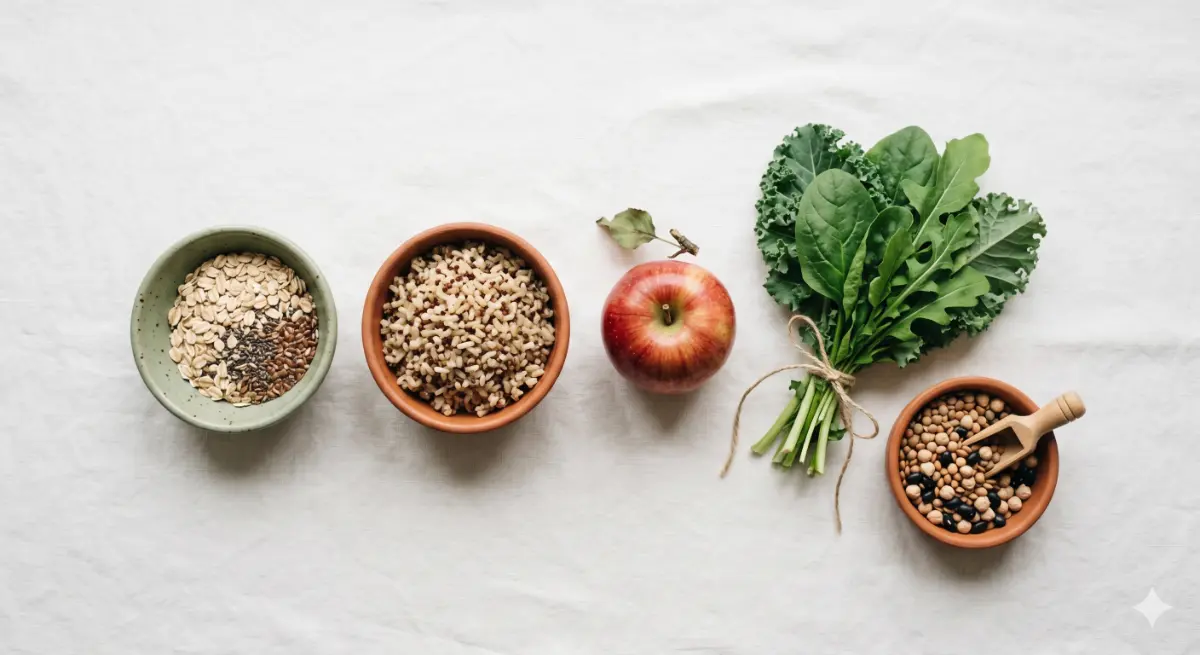
Fibers: why they are nutrition's new darling (and you probably eat too little)
Fibers: nutrition's new darling (and you probably eat too little)
By Vanessa Manfredini | Biomedical Scientist and future Nutritionist
For a long time, protein stole all the nutrition spotlight. But there's a nutrient that was quietly there, and now it's finally getting the attention it deserves: fibers. And rightly so!
The detail is that most people eat far less fiber than they need, and they don't even suspect it. So today I'm going to simply explain everything about fibers: what they are, their types, how much you need per day, why they are so important for your gut, and how to increase your intake without complication. Come with me! 🌿
"Fibers are the favorite food of your good bacteria. Taking care of them is taking care of your whole body, from the inside out."
What are fibers, after all?
Fibers are components of plant foods that our body cannot digest. That's right, they pass through the digestive system without being "broken down" like other nutrients. And that's precisely where their magic lies!
Since they are not digested, fibers arrive in the intestine almost intact, and there they become food for the good bacteria in our microbiota. They also help regulate the gut, satiety, blood sugar, and much more.
The two types of fiber (and why you need both)
There are two main types of fiber, and each has a different role. The ideal is to consume both!
| Type | What it does | Where to find |
|---|---|---|
| Soluble fiber | Forms a gel in the intestine, helps control cholesterol and blood sugar, feeds good bacteria | Oats, apple, legumes, chia, flaxseed |
| Insoluble fiber | Speeds up intestinal transit, adds bulk to stools, combats constipation | Whole grains, fruit and vegetable skins, seeds |
What about resistant starch?
There is also a special type that acts similarly to fibers: resistant starch. It is found in foods like greener bananas, cooked and then cooled potatoes and rice, and legumes. It serves as food for good bacteria and helps with gut health. An interesting trick to include in your routine!
How much fiber do I need per day?
That's the golden question! The recommendations from major health organizations point to a similar range:
- The World Health Organization recommends at least 25 grams of fiber per day for adults
- The Ministry of Health, in the Food Guide, suggests around 25 to 35 grams daily
- Some values can reach 30 to 38 grams, especially for men
The big problem is that most Brazilians don't even come close to this! With modern diets, full of ultra-processed foods and refined flours, we end up eating much less fiber than our bodies need.
Why are fibers so important? The benefits
This is where fibers truly shine. The benefits go far beyond "helping the gut function":
1. They feed your microbiota
This is the point that fascinates me the most! Fibers are the main food for the good bacteria in the gut. By fermenting them, these bacteria produce protective substances, such as butyrate, which has anti-inflammatory action. The more varied the fibers, the richer and more diverse your microbiota becomes.
2. They help control blood sugar
Fibers, especially soluble ones, slow down sugar absorption, helping to prevent glucose spikes. This is great for those with insulin resistance or who want to prevent diabetes.
3. They increase satiety
By adding bulk and slowing down digestion, fibers help you feel full for longer. This naturally aids in weight management, without needing to go hungry.
4. They help regulate cholesterol
Soluble fiber binds to cholesterol in the intestine and helps eliminate it, contributing to heart health.
5. They regulate the gut
The most well-known benefit! Fibers combat constipation, give stools adequate consistency, and help the gut function like clockwork.
6. They reduce inflammation
Studies suggest that a fiber-rich diet is associated with a reduction in inflammatory markers in the body. Since chronic inflammation is behind many diseases, this is very relevant.
Fiber-rich foods (and accessible in Brazil)
The good news is that real, Brazilian food is full of fiber! You don't need anything imported or expensive:
- Legumes: beans, lentils, chickpeas, peas
- Fruits: apple with skin, banana, papaya, orange with pulp, avocado
- Vegetables: broccoli, kale, carrot, pumpkin, okra, leafy greens
- Whole grains: oats, brown rice, real whole wheat bread
- Seeds: chia, flaxseed, sesame
- Nuts: cashews, walnuts, almonds
How to increase fiber intake in practice (without suffering)
Increasing fiber intake is easier than it seems. Here are some simple strategies:
- Eat three servings of fruit per day, preferably with skin or pulp
- Load up on greens and vegetables at lunch and dinner
- Add oats, chia, or flaxseed to fruits, smoothies, or yogurt
- Swap refined cereals for whole grains
- Include legumes (beans, lentils, chickpeas) in your routine
- Use seeds and nuts as a complement in recipes
1. Increase gradually. If you eat little fiber today, don't start eating 30 grams at once; this causes gas and discomfort. Increase gradually for your gut to adapt.
2. Drink water! Fibers need water to function well. Without hydration, they can even worsen constipation. So make sure to drink plenty of water throughout the day.
The final secret: variety
If there's one thing I want you to take from this post, it's this: it's not enough to eat a lot of fiber; the ideal is to eat varied fibers. Each type of fiber feeds a different group of good bacteria. So, the more colorful and diverse your plate is, the richer and healthier your microbiota becomes.
Think of fibers as a way to care for your inner garden. The more variety you offer, the more your gut flourishes. And a healthy gut reflects in everything: immunity, mood, energy, skin, and much more. 🌿
"There is no healthy microbiota without fibers. They are, literally, the food for your gut health."
Did you enjoy understanding the power of fibers? 💚
Tell me in the comments: do you think you eat enough fiber? Did you already know the difference between soluble and insoluble? Save this post to remember the tips and share it with anyone who needs to boost their fiber intake. 🌿
With care and science, Vanessa 🌹
📚 Scientific References
This content is based on health guidelines and scientific studies on fibers and microbiota. Main references:
- World Health Organization (WHO). Recommendations for dietary fiber intake for adults.
- Ministry of Health. Food Guide for the Brazilian Population. Brasília: MS, 2014.
- Makki K, et al. The impact of dietary fiber on gut microbiota in host health and disease. Cell Host & Microbe, 2018.
- Brazilian Diabetes Society. Dietary fibers: what is important to know.
The information is for educational purposes and does not replace individualized professional advice. The ideal fiber intake should consider each person's needs. Science is constantly evolving.