Water Stacking: Does the 'Boosted Water' Trend Really Work?
Water Stacking: Does the 'Boosted Water' Trend Work?
By Vanessa Manfredini | Biomedical Scientist and Future Nutritionist
Giant bottle, ice all the way up, a powder here, a syrup there, a dose of electrolytes over there. 💧 Water stacking has taken over social media and turned drinking water into a layered ritual. But does it really hydrate better? Let's talk, without judgment and with science! 🌿
"If the trend makes you drink more water, great. The problem starts when it promises what it can't deliver."
So, what is it? 💧
The idea is to "stack" ingredients in water: electrolytes, a pinch of salt, coconut water, collagen, fruits, herbs, chia, sometimes creatine, and the famous flavor syrups. The result is a personalized, colorful, and photogenic drink. It's almost become a skincare routine, but for hydration. 📱
What's GOOD about this trend ✅
I'll start with the praise, because it's fair:
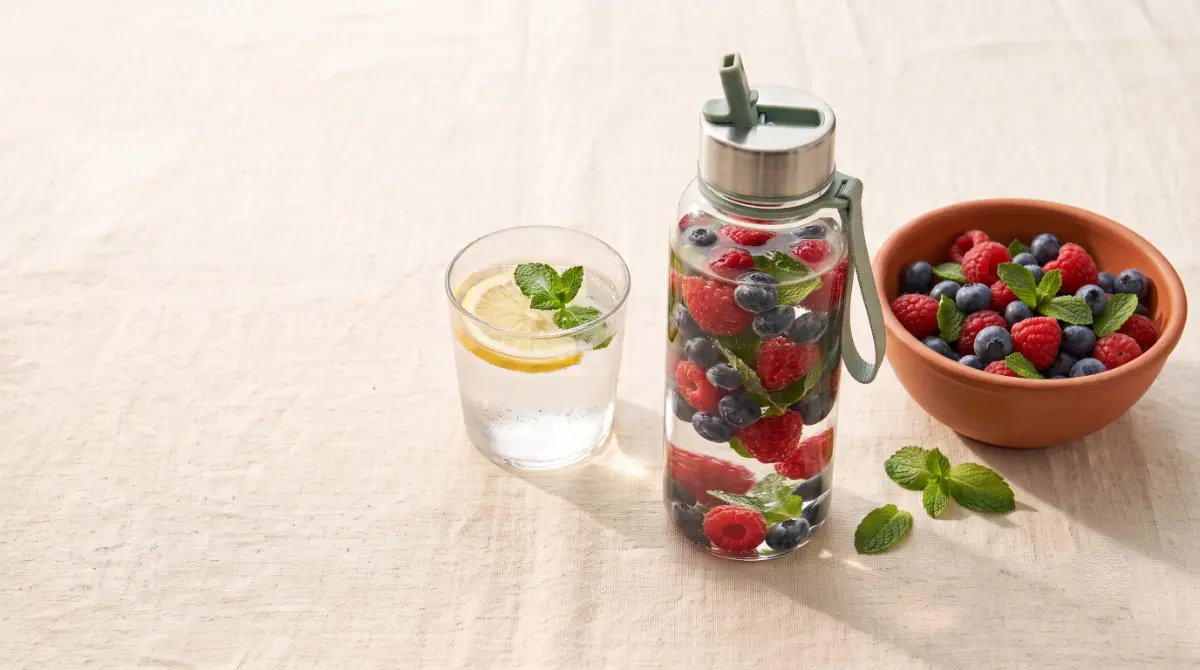
🍓 Fruit and herbs in water are great: mint, lemon, ginger, strawberry. They cost little and work.
💚 Creating a pleasant self-care ritual: the intention behind it is beautiful.
Where things start to get exaggerated ⚠️
💸 The cost: such a routine can get expensive for something a tap and a fruit could already do.
🧂 Electrolytes by habit: and this is where I want to draw your attention.
Do you really need electrolytes? 🧂
This is the question almost no one asks. Electrolytes (sodium, potassium, magnesium) are truly important, but you already get them from food. Extra replenishment makes sense in specific situations: long and intense exercise, heavy sweating, extreme heat, or losses due to vomiting and diarrhea.
For someone at work, in air conditioning, drinking water normally? It's probably not necessary. And it's worth remembering: adding extra sodium is not neutral, especially for those with high blood pressure or kidney concerns. 🩺
What about collagen in the bottle? 🧬
It doesn't become more effective just by being in water, you see? Collagen has its studies (I've written about it here), but what matters is the dose and consistency, not the pretty container. Putting it in the bottle is about practicality, not potency. 😊
Now, the point that matters most to me 💚
Notice one thing: this trend exploded at a time when everyone is exhausted. Poor sleep, stress, too much caffeine, long workdays. And then comes the promise that the right little bottle will give you back your energy.
But here's the truth that needs to be said with kindness: water doesn't solve exhaustion. If you live tired, drinking water and still feeling dragged, the problem isn't hydration. It could be sleep, it could be your thyroid, it could be anemia, it could be perimenopause knocking at the door. And no colorful powder will fix that. 🌸
So, what to do? 🌱
🍋 Want flavor? Use fruits: lemon, mint, ginger, fruit pieces. Pretty, tasty, and cheap.
🏃♀️ Electrolytes with purpose: for long workouts, intense heat, or losses. Not as a routine.
🔍 Read the label: if it has a huge list of things, it's not really "water" anymore.
😴 Fatigue isn't solved in a bottle: if it persists, investigate.
"Water is essential. But it's not an excuse not to look at the rest."
Have you joined this trend? 💚
Tell me in the comments what you put in your bottle! And share with that friend who has already spent a fortune on powders! 🌹
With kindness and science, Vanessa 🌹
📚 Scientific References
Content based on literature about hydration and electrolytes. Main references:
- National Academies of Sciences (formerly Institute of Medicine), Dietary Reference Intakes for Water, Potassium, Sodium, Chloride and Sulfate, reference on water and electrolyte needs.
- Literature on electrolyte replenishment in contexts of prolonged exercise, intense heat, and gastrointestinal losses.
- Clinical trials on collagen peptides, where dose and continuity of use are shown to be relevant.
- World Health Organization and health bodies, on reducing sodium consumption in the general population.
The information is for educational purposes and does not replace consultation with health professionals. Water and electrolyte needs vary according to climate, physical activity, and individual health conditions. Science is constantly evolving.