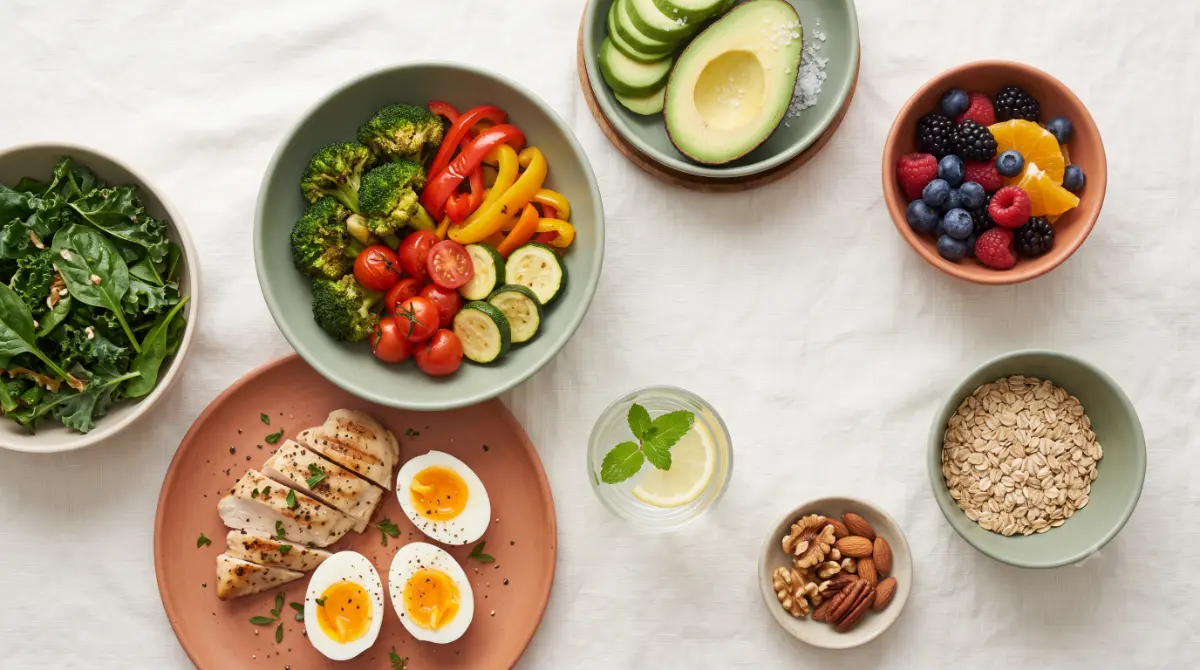
Foods that Help You Lose Weight Healthily (and How to Use Them)
Foods that Help You Lose Weight Healthily
By Vanessa Manfredini | Biomedical Scientist and Future Nutritionist
Is there a magic food that makes you lose weight? 🪄 No! But there are foods that GREATLY help the process because they provide satiety, preserve muscle, and take care of your metabolism. I've separated the main groups and how to use each one. Come with me! 🌿
"No single food makes you lose weight on its own. But the right ones make everything easier."
1. Lean Proteins 🥩
Examples: eggs, chicken, fish, lean meats, plain yogurt.
How to use: include one source in every meal.
2. Vegetables and Greens 🥦
Examples: broccoli, zucchini, leafy greens, tomato, carrot.
How to use: half your plate at lunch and dinner.
3. Legumes 🫘
Examples: beans, lentils, chickpeas, peas.
How to use: at lunch, or in salads and soups.
4. Whole Grains 🌾
Examples: oats, brown rice, quinoa, sweet potato.
How to use: as your carbohydrate portion, in moderation.
5. Healthy Fats 🥑
Examples: avocado, olive oil, nuts, seeds.
How to use: in small portions, a touch on your plate.
6. Fruits 🍓
Examples: apple, berries, orange, banana.
How to use: as snacks, preferably whole (not in juice).
7. Water-Rich Foods 💧
Examples: vegetable soups, salads, cucumber, watermelon.
How to use: a soup or salad to start your meal.
"Eat real food, with balance. Your body will thank you for the rest."
Did you like the suggestions? 💚
Tell me in the comments: which of these groups do you most often forget to include? Save this post to help with your grocery shopping and share it with anyone who never knows what to eat. Simplifying is caring! 🌹
With care and science, Vanessa 🌹
📚 Scientific References
Content based on consolidated recommendations for balanced eating. Main references:
- Harvard T.H. Chan School of Public Health. The Healthy Eating Plate.
- Literature on protein, fiber, and satiety in weight management.
- Brazilian Dietary Guidelines, on whole and minimally processed foods.
The information is for educational and illustrative purposes and does not replace individualized guidance from a nutritionist or doctor. Science is constantly evolving.