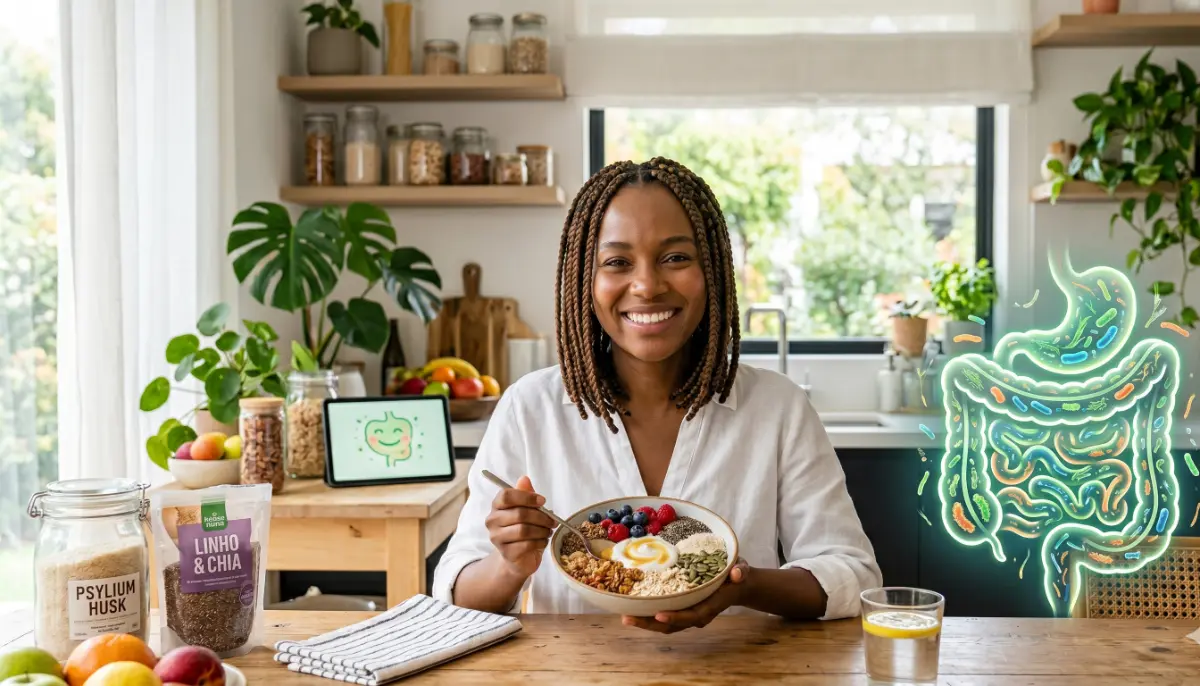
Fibremaxxing: The Strategic Fiber Trend That's Transforming Gut Health
By Vanessa Manfredini | Biomedical Scientist and Future Nutritionist
In recent months, a term has taken over health and nutrition social media worldwide: fibremaxxing. Like any trending term, it arrived with a lot of buzz and also a lot of confusion.
But this time, unlike many nutritional fads, science is on the trend's side. Fibremaxxing is not a baseless fad; it's a nutritional strategy with decades of scientific evidence behind it, which has finally gained a catchy enough name to go viral.
And best of all: the foods that are part of this strategy are accessible, inexpensive, and very common in the Brazilian diet. The beans you already eat every day can be your best ally.
Today I'm going to explain what fibremaxxing is, why it works, how to apply it in practice, and most importantly, how to do it intelligently without causing intestinal discomfort.
"Fiber isn't just for constipation. It's the nutrient that feeds your microbiota, regulates your hormones, controls your hunger, and protects your heart."
What is Fibremaxxing?
The term comes from English fiber + maxxing (to maximize). In practice, it means strategically increasing dietary fiber intake as a way to improve gut health, microbiota, metabolism, and overall well-being.
It's not about eating fiber haphazardly or in any quantity. Well-executed fibremaxxing is a conscious and progressive approach to intelligently increase the variety and quantity of fibers, respecting your gut's pace.
The official WHO recommendation is at least 25 grams of fiber per day for adults. Studies show that populations consuming between 35 and 50 grams daily have a lower incidence of cardiovascular diseases, type 2 diabetes, colorectal cancer, and obesity. The reality is that most Brazilians consume less than 15 grams per day—less than half of what is recommended.
Fiber Types Are Not All Equal
Before diving into practice, it's important to understand that there are different types of fiber, and each plays a specific role in the body:
Soluble Fibers
They dissolve in water and form a viscous gel in the intestine. This gel slows gastric emptying, prolonging satiety and reducing the absorption of glucose and cholesterol. They are the main food source for butyrate-producing bacteria, the short-chain fatty acid that nourishes intestinal cells.
Main Brazilian sources:
- Rolled oats - oat beta-glucan is one of the most studied soluble fibers
- Beans and lentils - rich in pectin and fructooligosaccharides
- Banana - especially slightly green ones, rich in resistant starch
- Apple and pear - pectin in the skin and pulp
- Cooked carrot and beetroot
- Okra - one of the richest sources of soluble fiber in Brazilian cuisine
- Psyllium - a soluble fiber supplement with a strong scientific basis
Insoluble Fibers
They do not dissolve in water and increase stool bulk, speeding up intestinal transit. They are essential for bowel regularity and for the prevention of colorectal cancer.
Main Brazilian sources:
- Wheat bran and whole wheat flour
- Brown rice
- Fruit and vegetable peels - don't peel when possible!
- Green leaves - kale, spinach, arugula
- Corn - especially whole kernels
- Cassava - one of the greatest treasures of Brazilian cuisine
- Flax and chia seeds
Resistant Starch: The Type That Feeds the Microbiota Most
Resistant starch is a special category that deserves attention. It resists digestion in the small intestine and reaches the large intestine intact, where it serves as a feast for beneficial bacteria, especially butyrate producers.
Most interestingly: cooling cooked foods significantly increases resistant starch formation. Rice, sweet potato, cassava, and potato cooked and then cooled in the refrigerator have much more resistant starch than when freshly cooked. It's the famous "day-old rice" that the gut loves!
Why Does Fibremaxxing Work? The Scientific Mechanisms
1. Feeds the Gut Microbiota
Fermentable fibers are the main food source for beneficial gut bacteria, especially Bifidobacterium, Lactobacillus, and Akkermansia muciniphila. When well-fed, these bacteria produce short-chain fatty acids—butyrate, propionate, and acetate—which have anti-inflammatory effects, strengthen the intestinal barrier, and regulate metabolism.
A diet poor in fiber is the main cause of dysbiosis in modern societies. Fibremaxxing is, in essence, a microbiota care strategy.
2. Regulates Hunger and Satiety
Soluble fibers slow gastric emptying—food stays longer in the stomach, prolonging satiety. Furthermore, fiber fermentation in the intestine stimulates the production of GLP-1 and PYY, hormones that signal satiety to the brain.
If you remembered the post about GLP-1—yes, fibers are one of the most natural and effective ways to stimulate this hormone that everyone is trying to mimic with medications!
3. Controls Glucose and Insulin
Soluble fiber forms a gel that slows glucose absorption, reducing glycemic spikes after meals and consequently the insulin response. For women with insulin resistance, PCOS, or pre-diabetes, increasing soluble fiber is one of the most impactful nutritional interventions.
4. Reduces Cholesterol
Oat beta-glucan and fruit pectin bind to bile acids in the intestine and eliminate them in the feces. The liver then needs to use circulating cholesterol to produce new bile acids, which reduces LDL in the blood. This is one of the most well-documented mechanisms in nutrition.
5. Protects Against Colorectal Cancer
Butyrate produced by fiber fermentation has a direct effect on regulating the cell cycle of colon cells, inhibiting the growth of tumor cells. Adequate fiber intake is associated with a significant reduction in the risk of colorectal cancer in population studies.
6. Supports Female Hormonal Health
Fibers participate in the enterohepatic circulation of estrogen. They bind to estrogen in the intestine and facilitate its excretion through feces, preventing reabsorption and excess circulating estrogen, which contributes to intense PMS, endometriosis, and PCOS.
"Eating more fiber isn't complicated. It's beans every day, oats for breakfast, fruit with skin, and day-old rice. You probably already have all of this at home."
How to Do Fibremaxxing in Practice Without Discomfort
Here's the most important point that many people ignore: abruptly increasing fiber causes intestinal discomfort—gas, bloating, and cramps. Your gut needs time to adapt.
The Golden Rule: Gradual Increase
Increase fiber intake progressively over 3 to 4 weeks. If you currently eat 15g per day, don't jump to 40g tomorrow. Increase by 5g per week and give your microbiota time to adapt.
Mandatory Hydration
Fibers absorb water. Without adequate hydration, increasing fiber can worsen constipation instead of improving it. Increase your water intake along with fiber—at least 35ml per kg of body weight per day.
Variety is More Important Than Quantity
Different fibers feed different species of bacteria. A varied diet with fibers from different sources and types is much more beneficial for the microbiota than eating a lot from a single source. The goal of fibremaxxing is not to count grams; it's to diversify.
A Day of Brazilian Fibremaxxing
See how simple it is to reach 35g of fiber per day with completely accessible foods in Brazil:
Breakfast
- Oatmeal with banana and chia - approximately 8g of fiber
Morning Snack
- Apple with skin + handful of nuts - approximately 4g of fiber
Lunch
- Brown rice + beans + leafy green salad with grated carrot + sautéed broccoli - approximately 14g of fiber
Afternoon Snack
- Natural yogurt with flaxseed and red berries - approximately 4g of fiber
Dinner
- Cooked sweet potato + sautéed vegetables + protein - approximately 6g of fiber
Total: approximately 36g of fiber - with real food, no supplements, no extra cost, and no complications. It's Brazil on your plate. 🇧🇷
Who Should Be Careful with Fibremaxxing?
Despite the numerous benefits, some situations require special attention:
- Irritable Bowel Syndrome (IBS) - some fermentable fibers, especially FODMAPs, can worsen symptoms. The approach should be individualized.
- Active Inflammatory Bowel Disease - Crohn's and ulcerative colitis may require temporary restriction of insoluble fibers.
- Post-intestinal surgery - always follow medical and nutritional guidance.
- SIBO - small intestinal bacterial overgrowth; excess fermentable fibers can worsen symptoms.
Conclusion
Fibremaxxing is one of the most well-founded nutritional trends of recent years because it's not a fad; it's a return to basics. It's about eating real, varied, plant-rich food.
Traditional Brazilian cuisine—beans, brown rice, cassava, fruits, vegetables, leafy greens—is already naturally rich in fiber. The problem is that food modernization has moved us away from this pattern, replacing real food with fiber-poor ultra-processed foods.
Fibremaxxing is not a radical diet. It's a re-engagement with what has always worked, with the awareness of someone who understands the science behind it.
Start with tomorrow's beans. Your microbiota will thank you. 🌿
"The best prebiotic in the world isn't in an imported capsule. It's in the beans your grandmother always put on your plate."
Did you like this content?
Leave your comment below—did you already know about fibremaxxing? How much fiber do you think you consume daily? Tell me! And follow me on Instagram @vanessamanfredini.nutri for more content on microbiota, metabolism, and real nutrition! 🌿
With care and science, Vanessa 🌿