Leaky Gut: What it is, Symptoms, and What Science Says About Diet
Leaky Gut: What it is, How to Identify it, and What Science Really Says
By Vanessa Manfredini | Biomedical Scientist and Future Nutritionist
If you've ever felt that constant bloating, that sensation that something in your body is always inflamed, or if you live with symptoms that doctors call "non-specific" — unexplained fatigue, allergies that appear out of nowhere, difficult digestion — perhaps your gut is trying to tell you something.
Leaky gut, or intestinal hyperpermeability, is one of those topics that has moved from scientific articles into people's daily lives. But with it have also come many distortions, exaggerations, and unsubstantiated information.
Today, I will explain what science truly says about this condition with rigor, clarity, and without alarmism. After all, that's how I like to work: where Biomedicine meets Nutrition.
What is leaky gut?
To understand leaky gut, we first need to understand what the intestinal barrier is. Imagine the inner wall of your intestine as a very well-built fence: it has small, controlled openings that allow the nutrients we need to pass through, but block everything that shouldn't enter the bloodstream — bacteria, toxins, undigested food particles.
These "controlled openings" are called tight junctions. They are proteins located between intestinal cells, opening and closing precisely, like an intelligent gate.
When this fence deteriorates — when the tight junctions loosen — we say there is an increase in intestinal permeability, or leaky gut. As a result, substances that should remain in the intestine can "leak" into the bloodstream, activating the immune system and generating a state of low-grade chronic inflammation.
"Leaky gut is not a disease in itself; it's a condition that can underlie many others."
What does science say about this?
Here's where I, as a Biomedical Scientist, need to be honest with you: the term "leaky gut" still generates debate in the scientific community. Not because the condition doesn't exist — it does, and it's very well documented — but because we are still precisely understanding its role in various diseases.
What we already have solid evidence for:
Intestinal hyperpermeability is associated with inflammatory bowel diseases such as Crohn's disease and ulcerative colitis
People with irritable bowel syndrome (IBS) frequently show alterations in intestinal permeability
Studies show an association with autoimmune diseases, such as celiac disease
Intestinal dysbiosis (microbiota imbalance) is both a cause and a consequence of leaky gut
Chronic stress, prolonged use of anti-inflammatory drugs, and an ultra-processed diet are factors that compromise the intestinal barrier
What is still being studied:
The exact relationship with conditions such as depression, anxiety, and thyroid diseases
The precise mechanisms connecting leaky gut to metabolic diseases
Which nutritional interventions have the most proven efficacy
In other words: yes, leaky gut is real and relevant. But care must be taken with those who use this term to sell miraculous protocols without scientific basis.
How to identify it? What are the signs?
There isn't a single test that definitively diagnoses leaky gut in daily clinical practice. The diagnosis is, most often, clinical and contextual. Some signs that may suggest intestinal barrier compromise include:
Frequent bloating and gas, especially after meals
Chronic diarrhea or constipation without apparent cause
Persistent fatigue, even with good sleep
Food sensitivities that seem to be increasing
Skin prone to acne, eczema, or rosacea
Mood changes, anxiety, or brain fog
Frequent infections — a sign that the immune system is overloaded
These symptoms are non-specific, meaning they can have many other causes. Therefore, professional evaluation is fundamental. The role of the nutritionist here is crucial: to identify dietary patterns, associate them with clinical history, and build an individualized strategy.
What does diet have to do with this?
Everything. Diet is one of the main modulators of the intestinal barrier, for better or for worse.
What compromises the intestinal barrier:
Ultra-processed foods rich in emulsifiers and chemical additives
Excessive alcohol consumption
Diet poor in fiber (which feeds the protective microbiota)
Gluten in genetically predisposed individuals or those with non-celiac sensitivity
Excess refined sugar, which promotes the growth of pathogenic bacteria
What helps restore and protect:
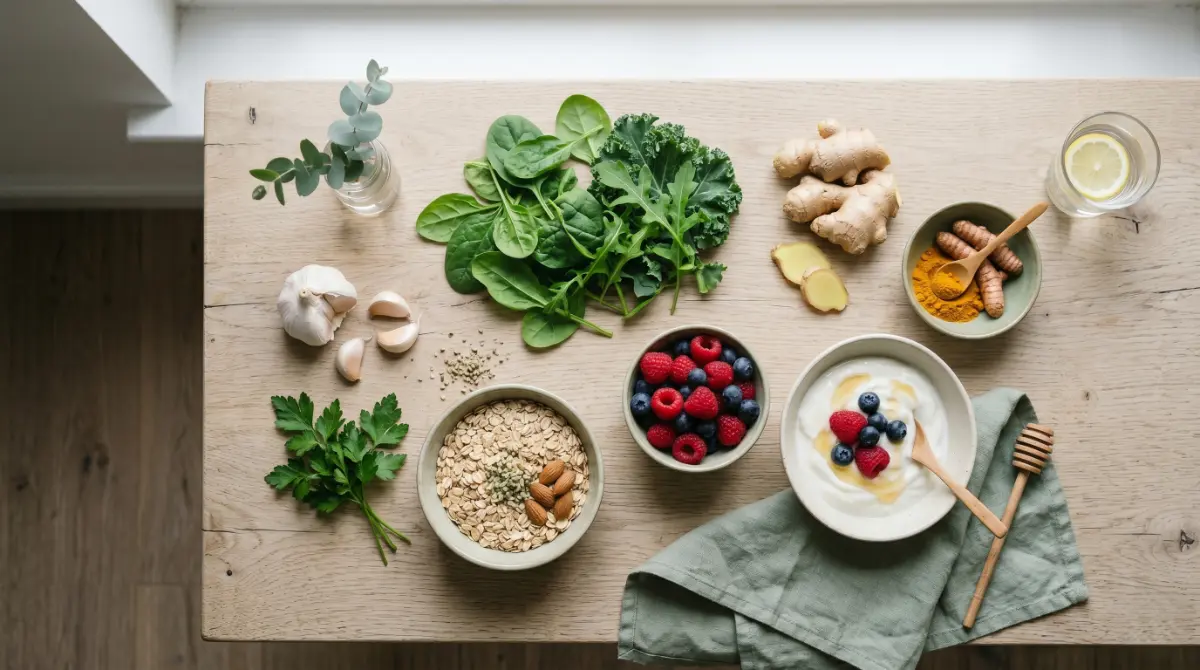
Prebiotic fibers (green banana, garlic, onion, oats) — feed good bacteria
Fermented foods (kefir, natural yogurt, sauerkraut) — sources of probiotics
Glutamine — essential amino acid for intestinal cell regeneration
Zinc — fundamental mineral for the integrity of tight junctions
Omega-3 — anti-inflammatory action that protects the intestinal lining
Polyphenols (berries, olive oil, cocoa) — positively modulate the microbiota
It's worth remembering: there is no single protocol. The nutritional approach needs to be personalized, considering your history, your exams, and your routine. It is precisely this individualized perspective that a nutritionist with a background in Biomedicine can offer.
Conclusion
Leaky gut is a serious topic, with a growing scientific basis and real implications for health. But it requires caution: not every digestive symptom means leaky gut, and not every leaky gut needs a radical protocol.
What science shows us is that taking care of your microbiota, adopting an anti-inflammatory diet, and reducing stress are solid pillars for protecting your intestinal barrier and, with it, your overall health.
If you identified with any of the symptoms I mentioned, it's worth talking to a healthcare professional. A careful nutritional assessment can be the first step to understanding what's happening in your body.
"Your gut is much more than a digestive organ. It is the center of your immune system, your mental health, and your hormonal balance. Taking care of it is taking care of everything."
Did you like this content?
Leave your comment below — I want to know if you've experienced any of these symptoms and what you've been doing to take care of your gut health. Also, follow me on Instagram @vanessa.manfredini.nutri for more daily scientific content!
Click here to learn more about Intestinal Dysbiosis.
With science and care, Vanessa 🌹
This content is based on scientific studies about intestinal permeability. Main references:
- 1. Fasano A. Zonulin and its regulation of intestinal barrier function. Physiological Reviews, 2011.
- 2. Camilleri M. Leaky gut: mechanisms, measurement and clinical implications in humans. Gut, 2019.
- 3. Bischoff SC, et al. Intestinal permeability: a new target for disease prevention and therapy. BMC Gastroenterology, 2014.
The information is for educational purposes and does not replace individualized professional guidance. Science is constantly evolving.