Intestinal Dysbiosis: What it is, How to Identify it, and What to Do to Restore Balance
By Vanessa Manfredini | Biomedical Scientist and future Nutritionist
You take care of yourself, eat reasonably well, try to sleep properly, but still feel that something isn't right. Bloating appears every day. Fatigue is constant. Your skin never stops giving you trouble. Emotions seem more intense than they should.
It might seem like isolated problems. But there is one condition that connects all these points: intestinal dysbiosis.
If you've read my previous posts on leaky gut and microbiota, you already have a good foundation to understand what I'm going to explain today. If you're new here, welcome! I'll explain everything clearly and without complicated terms.
What is intestinal dysbiosis?
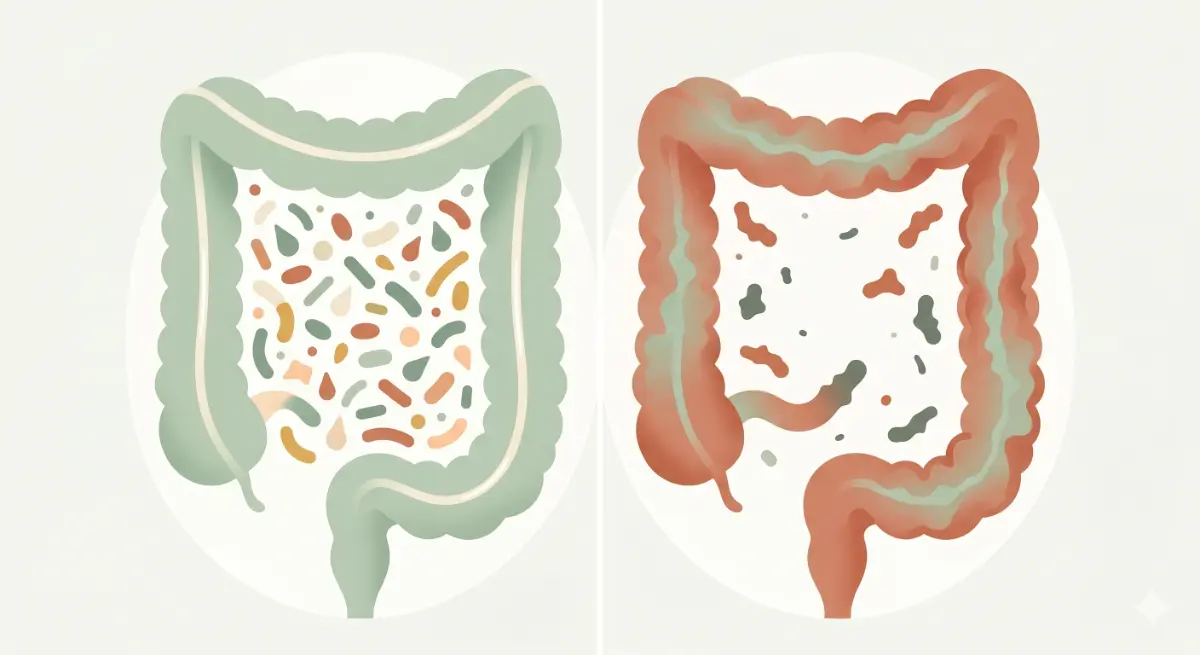
The word dysbiosis comes from Greek: dys (bad, altered) + bios (life). In practice, it means an imbalance in the composition of the intestinal microbiota – that community of trillions of microorganisms that live in our gut and which we discussed in the previous post.
A healthy microbiota is diverse and balanced. It has a wide variety of bacterial species, each with a specific role. When this balance is broken – whether by a reduction in good bacteria, an increase in harmful ones, or a loss of diversity – we have dysbiosis.
Important to understand: dysbiosis is not a disease with a definitive diagnosis. It is a functional state that can manifest in very different ways in each person – and which can be the silent root of many symptoms that seem to have no explanation.
"Dysbiosis rarely screams. It whispers – through bloating, fatigue, skin issues, and mood. Learning to listen to these signs is the first step."
What are the causes of dysbiosis?
The microbiota is dynamic and sensitive. It responds to the internal and external environment all the time. The main factors that cause dysbiosis are:
Inadequate Diet
A diet rich in ultra-processed foods, refined sugar, and poor-quality fats favors the growth of harmful bacteria. At the same time, a lack of fiber deprives good bacteria of the food they need to survive. It's a devastating combination for the microbiota.
Antibiotic Use
Antibiotics are essential for treating bacterial infections – but they don't discriminate between bad and good bacteria. A course of antibiotics can drastically reduce microbiota diversity, and full recovery can take months. This doesn't mean you shouldn't take them when necessary – but it's an important factor to consider.
Chronic Stress
The gut-brain axis is a two-way street. Chronic stress alters intestinal motility, reduces protective mucus production, and directly modifies microbiota composition. It's no coincidence that periods of intense stress are often accompanied by intestinal symptoms.
Poor Sleep Quality
The microbiota has its own circadian rhythm – it works in sync with the body's sleep-wake cycle. Poor sleep, irregular sleep schedules, or chronic insomnia alters this rhythm and compromises microbial diversity.
Other Factors
- Frequent use of anti-inflammatory drugs and proton pump inhibitors (omeprazol)
- Excessive alcohol consumption
- Sedentary lifestyle – physical activity has a proven positive impact on the microbiota
- Cesarean birth and absence of breastfeeding – impact the baby's initial colonization
- Diet poor in variety – dietary monotony reduces microbial diversity
What are the symptoms of intestinal dysbiosis?
Here lies one of the biggest challenges: dysbiosis symptoms are non-specific, meaning they can have other causes. That's why professional evaluation is so important. That said, the most common signs include:
Digestive Symptoms
- Frequent abdominal bloating, especially after meals
- Excessive gas
- Diarrhea, constipation, or alternation between the two
- Feeling of slow and heavy digestion
- Recurrent reflux or heartburn
Systemic Symptoms
- - Persistent fatigue with no apparent cause
- - Brain fog – difficulty concentrating and memory
- - Recurrent infections – colds, candidiasis, urinary tract infections
- - Allergies and food sensitivities that seem to be increasing
- - Unexplained joint and muscle pain
Emotional and Skin Symptoms
- Increased anxiety and irritability
- Mood swings without clear reason
- Acne, eczema, rosacea, or very reactive skin
- Hair loss beyond normal
If you identify with several of these symptoms at the same time, it's worth considering a nutritional assessment focused on intestinal health. The sooner the imbalance is identified and treated, the faster the recovery.
How is dysbiosis identified?
There is no single gold standard test to diagnose dysbiosis in daily clinical practice. What we have available are:
- Clinical and dietary assessment – dietary history, symptoms, and life context are fundamental
- Stool test with microbiota analysis – more modern tests that map the species present in the gut, still with high cost in Brazil
- Supportive laboratory tests – inflammatory markers such as high-sensitivity CRP, fecal calprotectin, zonulin, and lactulose/mannitol can help paint the picture
- Hydrogen breath test – useful when SIBO (small intestinal bacterial overgrowth), a specific form of dysbiosis, is suspected
In clinical practice, diagnosis is often made presumptively based on symptoms, history, and response to nutritional treatment.
What can diet do for dysbiosis?
Diet is the most powerful and accessible tool we have to modulate the microbiota. There is no single protocol – the approach needs to be individualized – but there are pillars that science has already well-established:
Increase Dietary Diversity
The more varied your diet, the more diverse your microbiota will be. Try to include at least 20 to 30 different types of plant foods per week. It doesn't have to be expensive or difficult: tomato, carrot, kale, beans, orange, banana – each one counts.
Prioritize Prebiotic Fibers
Fibers are the fuel for good bacteria. Rich and accessible sources in Brazil:
- Beans, lentils, and chickpeas – legumes are excellent sources of fiber
- Rolled oats – source of beta-glucan, with proven prebiotic effect
- Green banana and cooked and cooled cassava – rich in resistant starch
- Garlic and onion – sources of fructooligosaccharides
- Varied greens and vegetables – each type feeds different species of the microbiota
Include Fermented Foods
Fermented foods are natural sources of probiotics and help repopulate the gut with beneficial bacteria:
- Plain unsweetened whole yogurt
- Milk or water Kefir – can be made at home at very low cost
- Curd – very common and accessible in Brazil
- Homemade sauerkraut – fermented cabbage, simple and cheap to prepare
- Kombucha – increasingly available nationwide
Reduce What Harms the Microbiota
- Ultra-processed foods rich in emulsifiers and additives – research shows direct impact on intestinal permeability
- Excess refined sugar – feeds pathogenic bacteria and fungi like Candida
- Alcohol – alters microbial composition even in moderate amounts
- Unnecessary use of antibiotics and self-medication
Don't Forget Lifestyle
Diet is fundamental, but it's not the only pillar. Microbiota recovery is more effective when combined with:
- Regular and quality sleep – respecting the microbiota's circadian rhythm
- Regular physical activity – even walks have a proven positive impact
- Stress management – meditation, breathing, nature, whatever works for you
- Adequate hydration – water is essential for intestinal transit
"Restoring the microbiota is not a sprint; it's a marathon. But every step in the right direction makes a difference."
Conclusion
Intestinal dysbiosis is one of the most prevalent and least recognized conditions today. It doesn't have a single face – it can manifest as a digestive problem, as silent inflammation, as an emotional symptom, or as skin that never stops giving you trouble.
The path to balance begins with awareness: understanding that the gut is not an isolated organ, but the center of a complex system that influences practically everything in your body.
And the good news is that the microbiota responds. With consistency, dietary variety, and care, it recovers – and when it thrives, you thrive too.
In upcoming posts, we will continue to deepen this conversation. If you want to understand more about how to apply these principles to your routine, follow me here on the blog and on social media!
"Your gut has memory. It stores every choice you make and responds to every change you decide to implement."
Did you like this content?
Leave your comment below telling us if you have identified any of these symptoms in your life! And follow me on Instagram @vanessamanfredini.nutri Youtube Bio Código Saúde for daily scientific content – there's also much more about intestinal health waiting for you!
Do you know what FIBREMAXXING is? Read all about it.
With care and science, Vanessa 🌹
This content is based on scientific studies on intestinal dysbiosis. Main references:
- Carding S, et al. Dysbiosis of the gut microbiota in disease. Microbial Ecology in Health and Disease, 2015.
- Levy M, et al. Dysbiosis and the immune system. Nature Reviews Immunology, 2017.
- Wilkins LJ, et al. Defining dysbiosis for a cluster of chronic diseases. Scientific Reports, 2019.
The information is for educational purposes and does not replace individualized professional guidance. Science is constantly evolving.