Saffron and women's health: what science says (and the difference no one explains)
Saffron and women's health: what science says (and the difference no one explains)
By Vanessa Manfredini | Biomedical Scientist and future Nutritionist
Saffron has become a favorite when it comes to women's well-being, mood, and PMS. But there's one thing almost no one explains that makes all the difference: there are two completely different "saffrons," and many people confuse them!
So today, first of all, I'm going to clear up this confusion, and then tell you what science really says about the benefits of each, especially for us women. Come with me! 🌿
"Knowing what you consume is the first step to using food to your advantage. And in the case of saffron, the name hides an important difference."
There are two different saffrons!
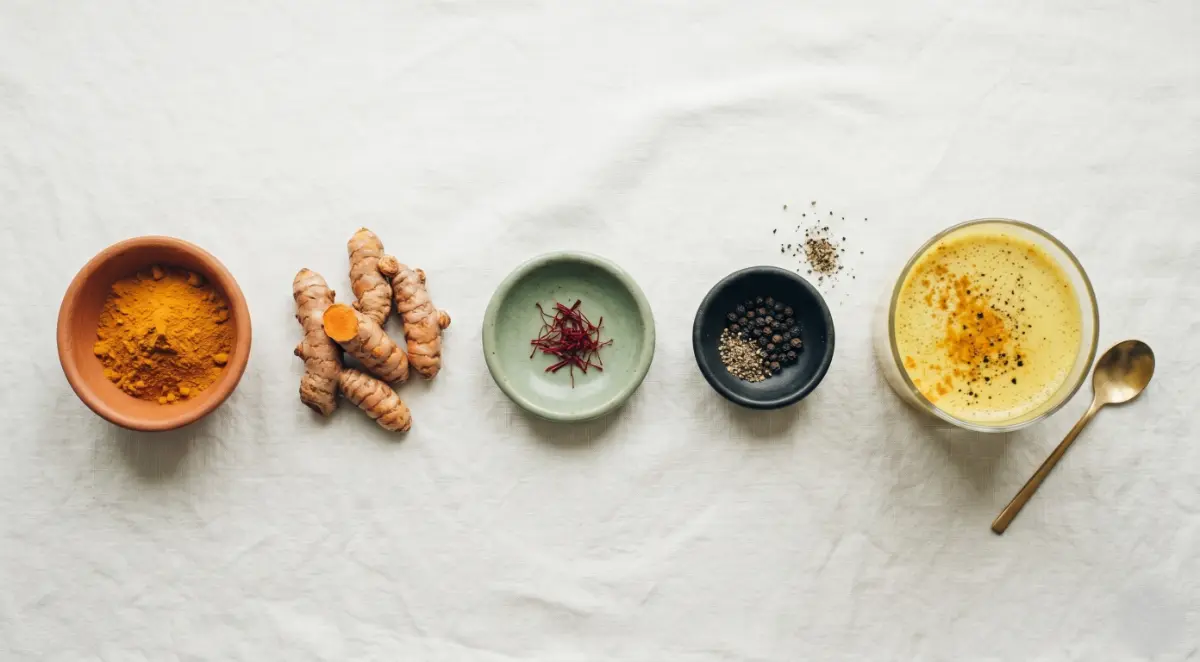
This is the part that causes a lot of confusion in Brazil. When we talk about "saffron," we might be referring to two very different things:
| Popular name | What it is | How it is |
|---|---|---|
| Turmeric (saffron of the earth) | The root Curcuma longa, in yellow powder | Inexpensive, common, used in daily seasoning |
| True saffron | The stigmas of the Crocus sativus flower | Expensive, in red threads, one of the world's most valuable spices |
Turmeric (saffron of the earth): the golden anti-inflammatory root
Turmeric is famous for curcumin, its active compound, known for its anti-inflammatory and antioxidant action. Studies suggest it can help with various aspects of health:
- Anti-inflammatory action, which can help with aches and discomforts
- Antioxidant power, fighting oxidative stress
- Possible support for digestive and joint health
For us women, the anti-inflammatory action can be interesting in conditions involving inflammation, and it complements an overall anti-inflammatory diet.
True Saffron (Crocus sativus): the mood ally
Here lies the trend linked to women's health! True saffron has been studied especially for its possible effect on mood and emotional well-being.
Some research suggests it can help with mild to moderate mood-related symptoms and also with PMS symptoms, such as irritability and emotional changes. It is a promising field of study, though still developing.
But beware: not everything is a miracle
As I always discuss with you here, it's important to maintain balance. Saffron (whether turmeric or true saffron) can be an ally, but it doesn't work miracles alone and doesn't replace treatment.
If you suffer from intense PMS, significant mood swings, or symptoms that affect your life, the most important thing is to seek professional guidance. Saffron can be a complement, as part of comprehensive care, never as a sole solution.
How to use in daily life
- Turmeric (saffron of the earth): use as a seasoning in rice, vegetables, soups, eggs. Combine with black pepper and olive oil to enhance its effects
- Golden milk: a warm drink with turmeric, pepper, ginger, and a good fat, delicious and comforting
- True saffron: a few threads in special preparations, or in standardized supplement form (always with guidance)
In summary
Turmeric (saffron of the earth) and true saffron are different things, with different benefits. Turmeric shines for its anti-inflammatory action, and true saffron has been studied for its support of mood and PMS. Both can be allies for women's health, but always within a balanced diet and broader care.
The most important thing is to know what you are consuming and to have realistic expectations. Food and spices are powerful allies, but they work best together, not as isolated magical solutions. 🌿
"Nature offers wonderful allies. It is up to us to use them with wisdom, balance, and true information."
Did you already know there were two types of saffron?
Tell me in the comments: do you use saffron in your kitchen? Did you know about this difference? I love bringing real science and practical advice to your daily life.
With care and science, Vanessa 🌹
📚 Scientific References
This content is based on scientific studies about turmeric and saffron. Main references:
- Hewlings SJ, Kalman DS. Curcumin: a review of its effects on human health. Foods, 2017.
- Daily JW, et al. Efficacy of turmeric extracts and curcumin for alleviating the symptoms of joint arthritis. Journal of Medicinal Food, 2016.
- Agha-Hosseini M, et al. Crocus sativus L. (saffron) in the treatment of premenstrual syndrome. BJOG, 2008.
- Hausenblas HA, et al. Saffron (Crocus sativus L.) and major depressive disorder: a meta-analysis. Journal of Integrative Medicine, 2013.
The information is for educational purposes and does not replace individualized professional guidance. Supplements should be used with professional advice. Science is constantly evolving.