PCOS and Insulin Resistance: what it is, symptoms, and how diet can help
PCOS and Insulin Resistance: what it is, how to identify it, and what diet can do for your hormonal balance
By Vanessa Manfredini | Biomedical Scientist and future Nutritionist
Irregular or absent menstrual cycle. Hair in unusual places. Acne that doesn't clear up even in adulthood. Difficulty losing weight even when doing everything right. Difficulty getting pregnant.
If you experience one or more of these symptoms, you may be facing one of the most common hormonal conditions among women of childbearing age: Polycystic Ovary Syndrome, or PCOS.
It affects between 8% and 13% of women worldwide, according to the World Health Organization, and is still largely underdiagnosed; many women go years without knowing what they have while living with symptoms that profoundly impact their quality of life.
Today I will explain what PCOS is, its relationship with insulin resistance, and what diet can do to help rebalance your hormones, based on scientific evidence and without impossible promises.
"PCOS is not just an ovarian problem. It is a metabolic condition that affects the entire body and deserves to be treated as such."
What is Polycystic Ovary Syndrome?
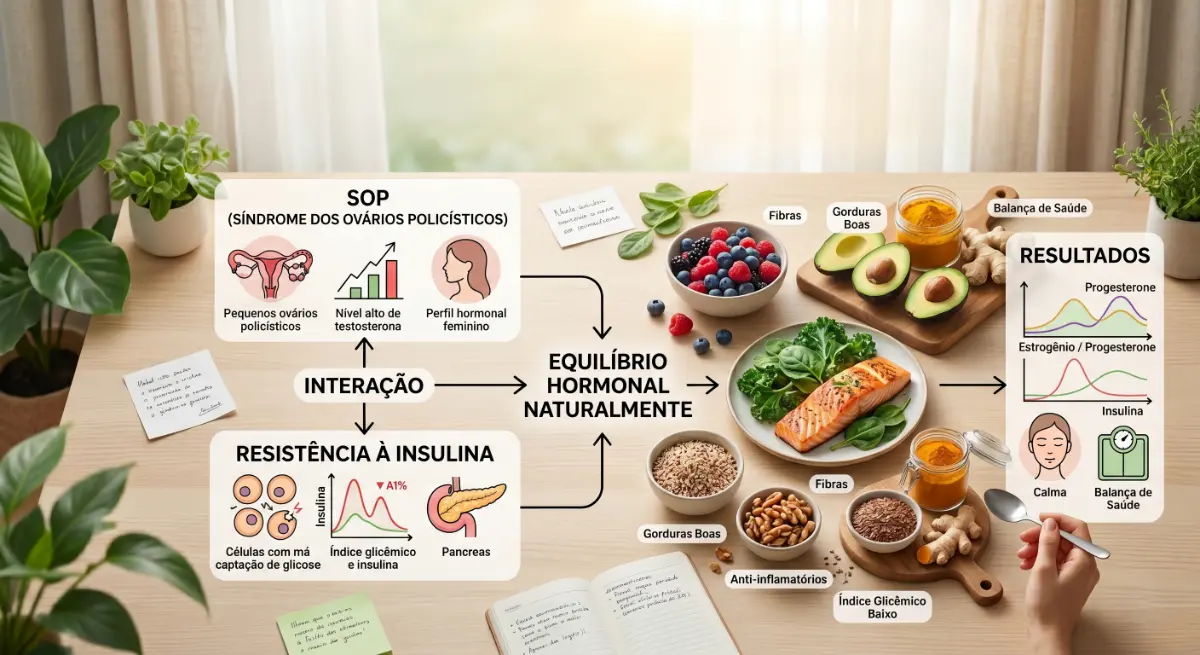
PCOS is a hormonal and metabolic condition characterized by an imbalance in female sex hormones, especially an excess of androgens (male hormones, such as testosterone), which interferes with the menstrual cycle and ovulation.
Diagnosis follows the Rotterdam criteria, which require the presence of at least two of the three criteria below:
- Hyperandrogenism - clinical signs such as acne, hirsutism (excess hair), or androgenetic alopecia, or tests with elevated testosterone
- Ovulatory dysfunction - irregular, very long, very short, or absent cycles
- Polycystic ovaries - multiple follicles on ultrasound (more than 20 follicles per ovary or increased ovarian volume)
It's worth remembering: the name "polycystic" is misleading. These follicles are not true cysts; they are follicles that have not fully matured. And a woman can have PCOS without having polycystic ovaries on ultrasound, if the other two criteria are present.
The connection between PCOS and insulin resistance
This is the central point I want you to understand, and it is often not explained properly in consultations.
Between 65% and 80% of women with PCOS have insulin resistance. This means that the body's cells do not respond well to insulin, the hormone that regulates glucose entry into cells, and the pancreas needs to produce more and more to compensate.
This excess circulating insulin:
- Stimulates the ovaries to produce more androgens worsening hyperandrogenism
- Inhibits the production of SHBG (a protein that "binds" testosterone), increasing free testosterone
- Favors abdominal fat accumulation, especially in the belly area
- Makes weight loss difficult even with diet and exercise
- Increases the long-term risk of developing type 2 diabetes and cardiovascular diseases
In other words: in PCOS with insulin resistance, the problem is not just hormonal; it's metabolic. And treating only the symptoms without addressing insulin resistance is like trying to empty a bathtub without turning off the tap.
"In PCOS, insulin and sex hormones communicate directly. Controlling insulin means controlling part of the hormonal imbalance."
PCOS Symptoms: what to look for
Most common symptoms
- Irregular menstrual cycles - very long, very short, or absent
- Persistent acne - especially on the chin, neck, and back
- Hirsutism - hair on the face, abdomen, breasts, or thighs
- Hair loss on the scalp (androgenetic alopecia)
- Difficulty getting pregnant
- Weight gain - especially in the abdominal region
Less known but very common symptoms
- Cravings for sweets and carbohydrates - a classic sign of insulin resistance
- Reactive hypoglycemia - intense hunger a few hours after eating
- Fatigue after carbohydrate-rich meals
- Anxiety and mood swings - linked to hormonal imbalance
- Skin darkening in folds, especially in the neck area - acanthosis nigricans, a sign of insulin resistance
- Irritable bowel syndrome - PCOS and gut health have an important connection
PCOS, gut, and microbiota: the connection few talk about
Recent studies show that women with PCOS have lower intestinal microbial diversity and a higher prevalence of dysbiosis compared to women without the condition. And the relationship is bidirectional:
- Intestinal dysbiosis increases systemic inflammation, which worsens insulin resistance
- Microbiota imbalance affects estrogen metabolism, worsening the hormonal profile
- Specific gut bacteria participate in regulating insulin sensitivity
- Leaky gut, common in dysbiosis, can amplify the inflammatory response that sustains PCOS
Caring for the microbiota does not directly treat PCOS, but it creates a more favorable metabolic and inflammatory environment for managing the condition.
What can diet do for PCOS?
Diet is one of the interventions with the strongest scientific evidence in the management of PCOS, especially when there is insulin resistance. The main goal is to improve insulin sensitivity, reduce inflammation, and support hormonal balance.
Glycemic control: the most important pillar
Reducing blood glucose spikes is fundamental to decreasing hyperinsulinemia, which fuels hyperandrogenism. In practice:
- Prefer complex carbohydrates rich in fiber: sweet potato, cassava, brown rice, oats
- Always combine carbohydrates with protein and fat in the same meal; this reduces the glycemic index of the meal
- Avoid eating carbohydrates in isolation, especially on an empty stomach
- Reduce refined sugar, white flour, and ultra-processed foods
- Distribute meals throughout the day; avoid long periods of fasting followed by large meals
Protein at every meal
Protein has a low glycemic impact, increases satiety, and preserves muscle mass, which is fundamental for insulin sensitivity. Include it in all meals:
- Eggs: a complete, versatile, and accessible source
- Chicken, fish, and lean meats
- Natural yogurt and kefir: have the probiotic bonus
- Beans, lentils, and chickpeas: plant protein + prebiotic fiber
- Cottage cheese and ricotta
Anti-inflammatory fats
Healthy fats do not raise glucose, reduce inflammation, and are raw material for hormone production:
- Extra virgin olive oil: use in salads and to finish dishes
- Avocado: rich in monounsaturated fat and fiber
- Cashews, walnuts, and almonds
- Sardines, tuna, and salmon: omega-3 with proven anti-inflammatory action
- Chia and flax seeds
Strategic nutrients for PCOS
- Inositol - especially myo-inositol and D-chiro-inositol: improves insulin sensitivity and ovarian function. Found in legumes, citrus fruits, and oats. Supplementation is well-studied in PCOS; talk to your doctor.
- Magnesium - participates in over 300 metabolic reactions and improves insulin sensitivity. Sources: pumpkin seeds, dark leafy greens, cocoa, banana, oats.
- Vitamin D - deficiency is very common in PCOS and associated with worsening hormonal and metabolic profiles.
- Zinc - helps reduce androgens and improves acne. Sources: meats, pumpkin seeds, nuts.
- Chromium - improves insulin sensitivity. Sources: broccoli, meats, whole eggs
Fermented foods and prebiotic fibers
To care for the microbiota, which, as we've seen, plays an important role in PCOS:
- 📌Kefir and natural yogurt daily
- 📌Beans and lentils: mandatory presence during the week
- 📌Oats for breakfast
- 📌Vegetable variety on your plate: the more colorful, the better
What to reduce or avoid in PCOS
- ➡️Refined sugar and sugary drinks: industrialized juices, sodas, chocolate milk
- ➡️Refined white flour: white bread, conventional pasta, cookies
- ➡️Ultra-processed foods in general: inflammatory and harmful to the microbiota
- ➡️Alcohol: worsens insulin resistance and overloads the liver, which processes hormones
- ➡️Excess dairy: in some women, it can increase androgens due to IGF-1. Individual testing with professional guidance.
Lifestyle beyond diet
Diet is fundamental, but it's not the only pillar:
- Physical exercise is one of the most effective interventions to improve insulin sensitivity in PCOS. A combination of strength training and aerobic exercise works very well.
- Quality sleep: sleep deprivation worsens insulin resistance and cortisol levels.
- Stress management: chronically elevated cortisol worsens the hormonal profile of PCOS.
- Regular medical follow-up: monitoring of glucose, insulin, androgens, and lipid profile.
Conclusion
PCOS is a complex condition that goes far beyond the ovaries. It is a metabolic, hormonal, and inflammatory syndrome and deserves care that recognizes this complexity.
Diet does not cure PCOS. But it can transform the quality of life for those living with it by improving insulin sensitivity, reducing inflammation, balancing hormones, and supporting the gut health that underpins it all.
If you have PCOS, follow-up with an endocrinologist or gynecologist is indispensable. And specialized nutritional support, which understands the biology behind the condition, can be the differential you haven't found yet.
"You don't have to fight your body. You need to understand it and give it what it needs to find balance."
Did you like this content?
Leave your comment below: do you have PCOS or know someone who does? Which symptom most impacts your quality of life? Tell me! And follow me on Instagram @vanessamanfredini.nutri for more content on women's hormonal health! 🌿
Read this article about Female Metabolism, I'm sure you'll like it!
With care and science, Vanessa 🌹
This content is based on scientific studies about PCOS. Main references:
- 1. Teede HJ, et al. International evidence-based guideline for the assessment and management of polycystic ovary syndrome. Human Reproduction, 2018.
- 2. Escobar-Morreale HF. Polycystic ovary syndrome: definition, aetiology, diagnosis and treatment. Nature Reviews Endocrinology, 2018.
- 3. Moran LJ, et al. Dietary composition in the treatment of polycystic ovary syndrome. Journal of the Academy of Nutrition and Dietetics, 2013.
The information is for educational purposes and does not replace individualized professional guidance. Science is constantly evolving.