Histamine Intolerance: Symptoms Almost No One Connects
Histamine Intolerance: Symptoms Almost No One Connects the Dots
By Vanessa Manfredini | Biomedical Scientist and Future Nutritionist
Do you wake up in the middle of the night for no apparent reason? Do you constantly have a stuffy, runny nose or sneezing fits? Do you feel itching on your skin, in your throat, or even inside your ear? Do you experience bloating, gas, and discomfort after eating? 🤔
Don't worry, perhaps these seemingly disparate symptoms have a common thread that few people investigate: histamine excess. This is a fascinating, still little-discussed topic that connects the gut, diet, and well-being in a surprising way. Come with me to understand! 🌿
"Many people spend years treating isolated symptoms, without ever looking for a possible common cause."
So, what is histamine? 🧬
Histamine is a substance that the body itself produces and is also present in various foods. It's not a villain; on the contrary: it participates in the body's defenses, stomach acid production, and even acts as a messenger in the brain.
The problem isn't histamine itself, but its accumulation. When more histamine enters (or is produced) than the body can eliminate, it builds up. And it's this excess that can lead to symptoms.
What histamine intolerance is (and what it ISN'T) ⚖️
Here's the first important point: histamine intolerance is not an allergy. Studies suggest it occurs due to an imbalance between the amount of histamine and the body's ability to degrade it.
The main enzyme that performs this "cleanup" of histamine from foods is called DAO (diamine oxidase). And guess where it primarily acts? In the gut! When the activity of this enzyme is low, histamine tends to accumulate.
The gut connection (the part I find most fascinating) 🦠
Since the DAO enzyme is primarily produced in the gut wall, gut health is directly involved in this story. Studies suggest that conditions affecting the intestinal mucosa, such as inflammation and conditions like irritable bowel syndrome, can temporarily reduce the production of this enzyme.
In other words, taking care of your gut also means taking care of how your body handles histamine. One more proof that the gut is a great conductor of our health. 🌱
The symptoms (there are many, and that's why they're so confusing) 🚨
It is precisely because it is so varied that this condition often goes unnoticed. Reported symptoms can appear in various body systems:
🤧 Respiratory: stuffy nose, runny nose, sneezing (very similar to rhinitis).
🔴 Skin: itching, redness, hives.
🤢 Digestive: bloating, gas, abdominal pain, diarrhea.
💓 Cardiovascular: palpitations, dizziness, drop in blood pressure.
And the curious detail you may have already noticed: symptoms often appear after eating, sometimes hours later. That's why it's so difficult to connect the dots.
Do you have rhinitis or allergies? Then pay attention 🤧
That's a great question, and the answer is interesting. Histamine is the main messenger of allergic reactions (it's no coincidence that antihistamines exist for allergies and rhinitis).
People who already live with allergic conditions, such as rhinitis, tend to have a body that is more "reactive" to histamine. Therefore, they may be more sensitive to an overload coming from their diet. But beware: having rhinitis does not automatically mean having histamine intolerance. They are different things that can merely overlap. It's a matter of greater propensity, not a rule.
Histamine-rich foods (and the great irony) 🍽️
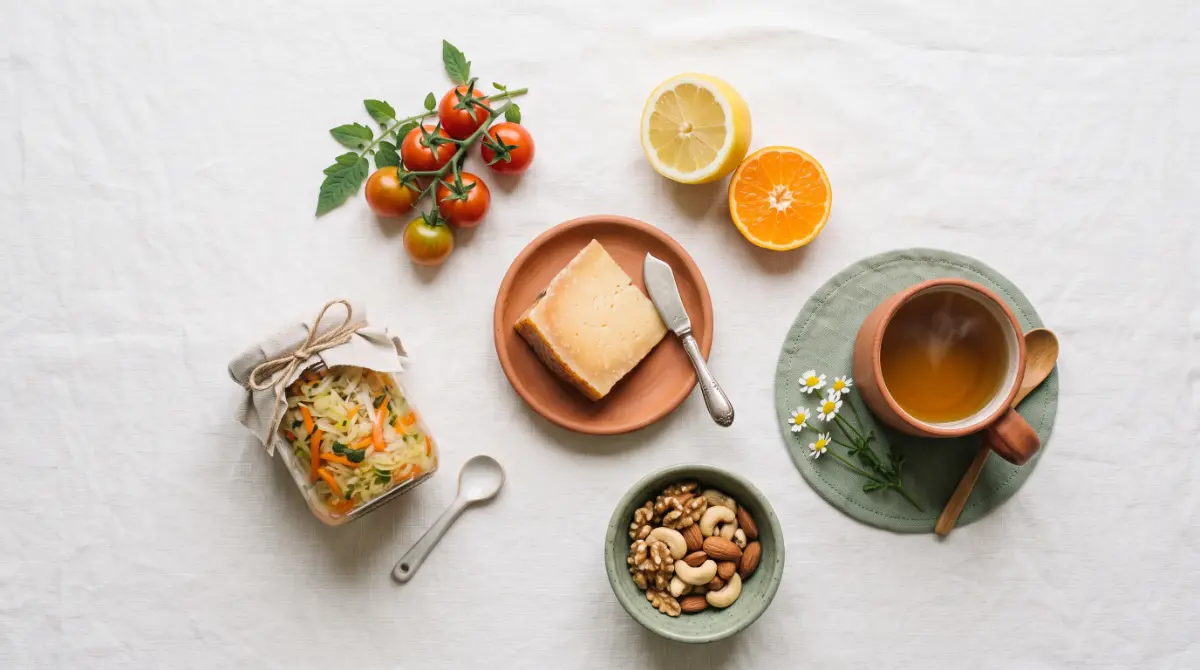
Here comes the most surprising part: many foods considered healthy are rich in histamine or stimulate its release. See some examples:
🥬 Fermented foods (like sauerkraut and kombucha), which are great for the microbiota, but rich in histamine.
🍷 Alcoholic beverages, especially wine.
🍅 Tomato, spinach, avocado, banana, citrus fruits, cocoa, and nuts.
Therefore, someone might be eating "super healthy" and still feel unwell, without understanding why. It's not that these foods are bad; they are great for most people. The issue is individual sensitivity.
Hold on: here comes scientific honesty 🔬
Diagnosis is challenging and should be made by a healthcare professional, who will investigate, rule out other causes, and, if appropriate, guide an individual strategy. A histamine-reduced diet is quite restrictive and should only be followed temporarily and under supervision, to avoid nutritional deficiencies or food-related anxiety. 💚
What to take away from this text 🌱
If you've identified with several of these isolated symptoms, it might be worth talking to a doctor or nutritionist about histamine, instead of treating each symptom separately forever. Knowing this possibility is already a step. And, in the end, everything comes back to the same place: a well-cared-for gut is the foundation of almost everything. 🌹
"Sometimes, what seems like a bunch of separate problems might have a common root waiting to be investigated."
Did this content open your eyes? 💚
Tell me in the comments: had you heard of histamine intolerance before? Did you identify with any signs? Save this post and share it with anyone who constantly feels unwell without finding an explanation. Information is the first step towards care. 🌿
With care and science, Vanessa 🌹
📚 Scientific References
This content is based on literature about histamine, DAO enzyme, and gut health. Main references:
- Comas-Basté O, et al. Histamine Intolerance: The Current State of the Art. Biomolecules, 2020.
- Schnedl WJ, et al. Diamine oxidase supplementation improves symptoms in patients with histamine intolerance. Food Science and Biotechnology, 2019.
- Izquierdo-Casas J, et al. Diamine oxidase (DAO) supplement reduces headache in episodic migraine patients with DAO deficiency. Clinical Nutrition, 2019.
- San Mauro Martin I, et al. Histamine intolerance and dietary management: a complete review. Allergologia et Immunopathologia, 2016.
The information is for educational purposes and does not replace individualized professional advice. Histamine intolerance is still a topic under study and debate. Science is constantly evolving.