Chronic Inflammation: What it is, Why it Happens, and How to Calm it (Easily Explained)
Chronic Inflammation: What it is and How to Calm it (Easily Explained)
By Vanessa Manfredini | Biomedical Scientist and Future Nutritionist
You've probably heard that a certain food is "anti-inflammatory" or that inflammation is behind various diseases. But what exactly is this chronic inflammation? 🤔 Is it really that important? And most importantly: what can you do about it?
Since this is one of those concepts that connects almost everything I talk about here (gut, skin, hormones, metabolism), I decided to demystify it once and for all. Come with me, and I'll explain it in a simple and practical way! 🌿
"Inflammation is not the villain. It's an ally of the body. The problem begins when it doesn't go away and turns into a low fire that never extinguishes."
First: inflammation isn't always bad! 🔥
It might seem strange, but inflammation is a defense mechanism of the body, and it saves your life every day! When you cut yourself, sprain your ankle, or catch a cold, the body triggers inflammation to fight the problem and begin healing. It's that redness, swelling, and warmth in the area. This is acute inflammation, which is rapid and necessary.
➡️ Think of it like firefighters: when there's a fire (an injury or infection), they arrive, put out the fire, and leave. That's the healthy job of inflammation. 🚒
The problem is when the firefighters don't leave
Chronic inflammation is different. It's when the body's "alert state" doesn't switch off and stays on at a low, constant level for a long time, sometimes for years. It's as if the firefighters camped out in your house forever, even without any fire.
That's why it's also called silent or low-grade inflammation: it doesn't hurt, it doesn't show, but it gradually wears down the body, behind the scenes. 🤫
Why does chronic inflammation happen?
Several modern lifestyle factors can keep this "low fire" burning. The main ones are:
- 🍔 Unbalanced diet: excess of ultra-processed foods, sugar, fried foods, and bad fats
- 🦠 Microbiota imbalance: an unbalanced gut can fuel inflammation
- 😰 Chronic stress: always living in alert mode keeps the body inflamed
- 😴 Poor sleep: sleeping poorly hinders the body's repair processes
- 🛋️ Sedentary lifestyle: lack of movement promotes inflammation
- ⚖️ Excess body fat: especially abdominal fat, which is metabolically active
Why does this matter for your health?
Science has associated low-grade chronic inflammation with various health issues throughout life. Studies suggest it is involved in processes related to metabolism, the heart, aging, skin, and overall well-being.
➡️ I don't want to scare you, and there's no need to! The point is that, since it's silent, it's worth taking care of your lifestyle preventively, with balance and without obsession. Small habits make a big difference over time. 🌿
How to calm inflammation in daily life 🌱
The good news is that the lifestyle that calms inflammation is the same one that's already good for everything! Look how simple it is:
| Pillar | What to do |
|---|---|
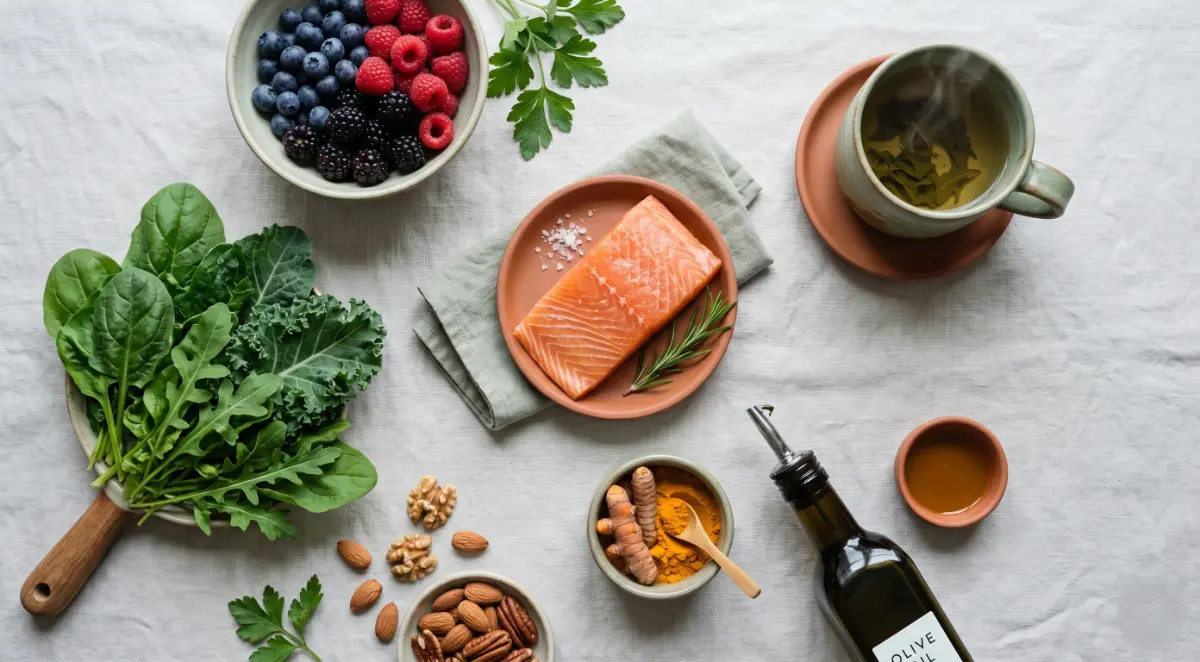
| Diet | Prioritize whole foods: vegetables, fruits, fiber, good fats (olive oil, fish, nuts), and spices like turmeric |
| Gut | Load up on fiber and fermented foods to nourish the microbiota |
| Sleep | Sleep well; it's during sleep that the body repairs itself |
| Movement | Move your body regularly, in your own way |
| Stress | Take care of your mind, rest, and moments of pause |
| Reduce | Decrease ultra-processed foods, excess sugar, alcohol, and cigarettes |
In Summary
Inflammation is an important defense of the body. The problem is when it becomes chronic, that low, silent fire that stays lit unnecessarily. It is mainly influenced by lifestyle: diet, gut, sleep, movement, and stress.
➡️ And the most beautiful part is that taking care of this doesn't require anything radical. It's the famous balance: whole foods, a happy gut, good nights of sleep, movement, and mental care. Small habits that, when combined, keep your body in harmony. 🌿
"Managing inflammation isn't about radical diets or prohibitions. It's about gently building a lifestyle that keeps your body in balance."
Did you enjoy demystifying this topic? 💚
Tell me in the comments: had you heard about silent inflammation before? Do you have any questions? I love taking topics that seem complicated and making them easy for you.
With care and science, Vanessa 🌹
📚 Scientific References
This content is based on scientific studies about inflammation and lifestyle. Main references:
- Furman D, et al. Chronic inflammation in the etiology of disease across the life span. Nature Medicine, 2019.
- Minihane AM, et al. Low-grade inflammation, diet composition and health: current research evidence and its translation. British Journal of Nutrition, 2015.
- Calder PC, et al. Dietary factors and low-grade inflammation in relation to overweight and obesity. British Journal of Nutrition, 2011.
- Galland L. Diet and inflammation. Nutrition in Clinical Practice, 2010.
The information is for educational purposes and does not replace individualized professional guidance. Science is constantly evolving.