Bloating and Fluid Retention: Causes, Differences, and What to Do
Bloating and Fluid Retention: Causes, Differences, and What Really Works
By Vanessa Manfredini | Biomedical Scientist and Future Nutritionist
Who hasn't woken up feeling "bloated," with clothes tighter or a distended belly? This discomfort is super common, especially among women. But there's an important thing: not all bloating is the same, and understanding the cause is the first step to resolving it.
Today I'm going to explain the difference between abdominal bloating and fluid retention, the main causes of each, and most importantly, what really works to feel better. No magic formulas, just what's based on truth. Come with me! 🌿
"Before wanting to debloat at all costs, it's worth understanding why the bloating occurred. The cause always points to the best path."
Bloating vs. Fluid Retention: They are not the same thing
Many people use the terms interchangeably, but they are different:
| Type | What it is | Where you feel it |
|---|---|---|
| Abdominal distension (bloating) | Accumulation of gas or digestive discomfort in the belly | Distended belly, especially after eating |
| Fluid retention | Accumulation of water in the body's tissues | Legs, feet, hands, face, general feeling of being "swollen" |
What causes abdominal bloating (distended belly)
This bloating is usually linked to the digestive system and microbiota. The most common causes are:
- Excess gas from the fermentation of certain foods
- Eating too fast or swallowing air
- Imbalance of the gut microbiota (dysbiosis)
- Food intolerances or sensitivities
- Constipation
- Consumption of highly fermentable foods in sensitive individuals
What causes fluid retention
Fluid retention, on the other hand, has other causes, the main ones being:
- Excess sodium (salt): the big villain! Excess sodium makes the body hold onto water
- Hormonal changes: very common during PMS, due to cycle fluctuations
- Sedentary lifestyle: staying still for too long hinders circulation
- Low water intake: it seems contradictory, but drinking too little water makes the body retain more
- Diet rich in ultra-processed foods: full of hidden sodium
What really works to feel better
Now for the practical part! Forget miraculous teas and radical solutions. What really works is simpler:
1. Drink more water
It seems contradictory, but the more hydrated you are, the less your body retains fluids. Water helps balance and eliminate excess sodium.
2. Reduce sodium (and ultra-processed foods)
Reducing salt and especially industrialized foods (which are full of hidden sodium) makes a huge difference in retention. The World Health Organization recommends significantly moderating sodium consumption.
3. Prioritize natural foods
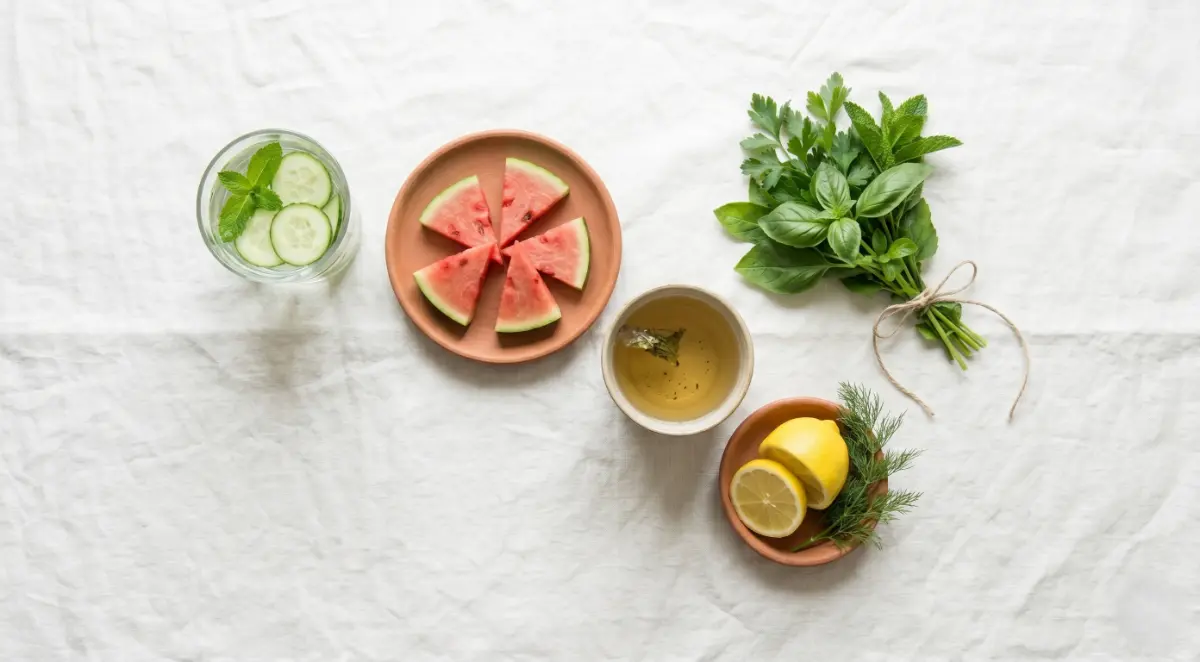
Fruits and vegetables rich in water and potassium (like watermelon, cucumber, leafy greens) help balance body fluids.
4. Move your body
Physical activity helps circulation and the body eliminate excess fluids. It doesn't have to be intense; walking helps a lot!
5. Take care of your gut
For abdominal bloating, taking care of the microbiota with fiber, fermented foods, and good hydration, in addition to eating calmly and chewing well, makes all the difference.
What NOT to do
- Do not take diuretics on your own; they can be dangerous
- Do not cut water thinking it will debloat you; it's the opposite!
- Do not fall for "miracle detox" teas or products that promise to debloat overnight
- Do not ignore persistent bloating; seek evaluation
In summary
Abdominal bloating and fluid retention have different causes, and understanding your specific case helps resolve it. For belly bloating, the focus is on the gut and digestion. For retention, the focus is on reducing sodium, drinking water, moving, and eating real food.
No radical solutions or miraculous products. Consistent care with diet, hydration, and your body is what brings true, healthy, and lasting relief. 🌿
"The body is not our enemy when it bloats. It is communicating something. Our role is to listen and care with kindness."
Did this content help you understand bloating?
Tell me in the comments: do you suffer more from belly bloating or fluid retention? I love bringing clarity and science without sensationalism.
With care and science, Vanessa 🌹
📚 Scientific References
This content is based on health guidelines and studies on sodium, digestion, and fluid balance. Main references:
- Organização Mundial da Saúde (OMS). Diretriz: ingestão de sódio para adultos e crianças, 2012.
- Lacy BE, et al. Bloating and distension: a review. The American Journal of Gastroenterology, 2021.
- He FJ, MacGregor GA. Salt and water retention. Hypertension, 2009.
The information is for educational purposes and does not replace individualized professional advice. Persistent bloating should be evaluated by a healthcare professional. Science is constantly evolving.