Hinchazón y retención de líquidos: causas, diferencia y qué hacer
Hinchazón y retención de líquidos: causas, diferencia y lo que realmente funciona
Por Vanessa Manfredini | Biomédica y futura Nutricionista
¿Quién no se ha despertado sintiéndose "hinchada", con la ropa más ajustada o el vientre abultado? Esta molestia es muy común, especialmente entre las mujeres. Pero hay algo importante: no toda hinchazón es igual, y entender la causa es el primer paso para resolverla.
Hoy te voy a explicar la diferencia entre la hinchazón abdominal y la retención de líquidos, las principales causas de cada una y, sobre todo, lo que realmente funciona para sentirte mejor. Sin fórmulas mágicas, solo lo que tiene una base real. ¡Ven conmigo! 🌿
"Antes de querer deshincharte a toda costa, vale la pena entender por qué ocurrió la hinchazón. La causa siempre indica el mejor camino."
Hinchazón vs. retención de líquidos: no son lo mismo
Mucha gente usa los términos como sinónimos, pero son diferentes:
| Tipo | Qué es | Dónde se siente |
|---|---|---|
| Distensión abdominal (hinchazón) | Acumulación de gases o malestar digestivo en el abdomen | Vientre hinchado, principalmente después de comer |
| Retención de líquidos | Acumulación de agua en los tejidos del cuerpo | Piernas, pies, manos, cara, sensación de "hinchazón" general |
Qué causa la hinchazón abdominal (vientre abultado)
Esta hinchazón generalmente está ligada al sistema digestivo y a la microbiota. Las causas más comunes son:
- Exceso de gases por la fermentación de ciertos alimentos
- Comer muy rápido o tragar aire
- Desequilibrio de la microbiota intestinal (disbiosis)
- Intolerancias o sensibilidades alimentarias
- Estreñimiento
- Consumo de alimentos muy fermentables en personas sensibles
Qué causa la retención de líquidos
La retención de líquidos tiene otras causas, siendo las principales:
- Exceso de sodio (sal): ¡el gran villano! El sodio en exceso hace que el cuerpo retenga agua
- Alteraciones hormonales: muy común en el SPM, por las oscilaciones del ciclo
- Sedentarismo: permanecer mucho tiempo inactiva dificulta la circulación
- Baja ingesta de agua: parece contradictorio, pero beber poca agua hace que el cuerpo retenga más
- Alimentación rica en ultraprocesados: llenos de sodio oculto
Lo que realmente funciona para sentirte mejor
¡Ahora la parte práctica! Olvídate de los tés milagrosos y las soluciones radicales. Lo que funciona de verdad es más simple:
1. Bebe más agua
Parece contradictorio, pero cuanto más hidratada estés, menos líquidos retiene el cuerpo. El agua ayuda a equilibrar y a eliminar el exceso de sodio.
2. Reduce el sodio (y los ultraprocesados)
Disminuir la sal y, sobre todo, los alimentos industrializados (que están llenos de sodio oculto) marca una diferencia enorme en la retención. La Organización Mundial de la Salud recomienda moderar bastante el consumo de sodio.
3. Prioriza los alimentos naturales
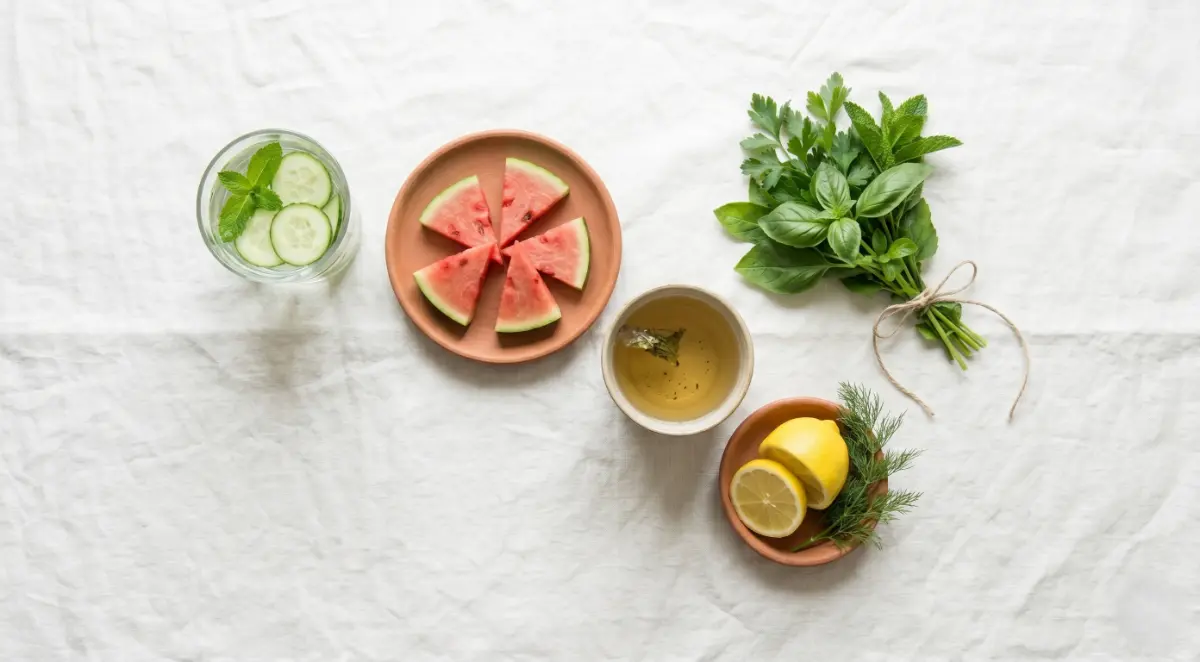
Frutas y verduras ricas en agua y potasio (como sandía, pepino, hojas verdes) ayudan a equilibrar los líquidos del cuerpo.
4. Mueve el cuerpo
La actividad física ayuda a la circulación y al cuerpo a eliminar el exceso de líquidos. ¡No tiene que ser nada intenso, caminar ya ayuda mucho!
5. Cuida tu intestino
Para la hinchazón abdominal, cuidar la microbiota con fibras, fermentados y buena hidratación, además de comer con calma y masticar bien, marca toda la diferencia.
Lo que NO debes hacer
- No tomes diuréticos por tu cuenta, pueden ser peligrosos
- ¡No dejes de beber agua pensando que vas a deshincharte, es lo contrario!
- No caigas en tés o productos "detox milagrosos" que prometen deshincharte de la noche a la mañana
- No ignores una hinchazón persistente, busca evaluación
En resumen
La hinchazón abdominal y la retención de líquidos tienen causas diferentes, y entender cuál es tu caso ayuda a resolverlo. Para la hinchazón del vientre, el foco es el intestino y la digestión. Para la retención, el foco es reducir el sodio, beber agua, moverse y comer comida de verdad.
Nada de soluciones radicales o productos milagrosos. El cuidado consistente con la alimentación, la hidratación y el cuerpo es lo que trae el alivio de verdad, de forma saludable y duradera. 🌿
"El cuerpo no es nuestro enemigo cuando se hincha. Está comunicando algo. Nuestro papel es escuchar y cuidar con gentileza."
¿Este contenido te ayudó a entender la hinchazón?
Cuéntame en los comentarios: ¿sufres más de hinchazón en el vientre o de retención de líquidos? Me encanta aportar claridad y ciencia sin alarmismo.
Con cariño y ciencia, Vanessa 🌹
📚 Referencias científicas
Este contenido se basa en directrices de salud y estudios sobre sodio, digestión y equilibrio de líquidos. Principales referencias:
- Organización Mundial de la Salud (OMS). Directriz: ingesta de sodio para adultos y niños, 2012.
- Lacy BE, et al. Bloating and distension: a review. The American Journal of Gastroenterology, 2021.
- He FJ, MacGregor GA. Salt and water retention. Hypertension, 2009.
Las informaciones tienen carácter educativo y no sustituyen el acompañamiento profesional individualizado. La hinchazón persistente debe ser evaluada por un profesional de la salud. La ciencia está en constante evolución.